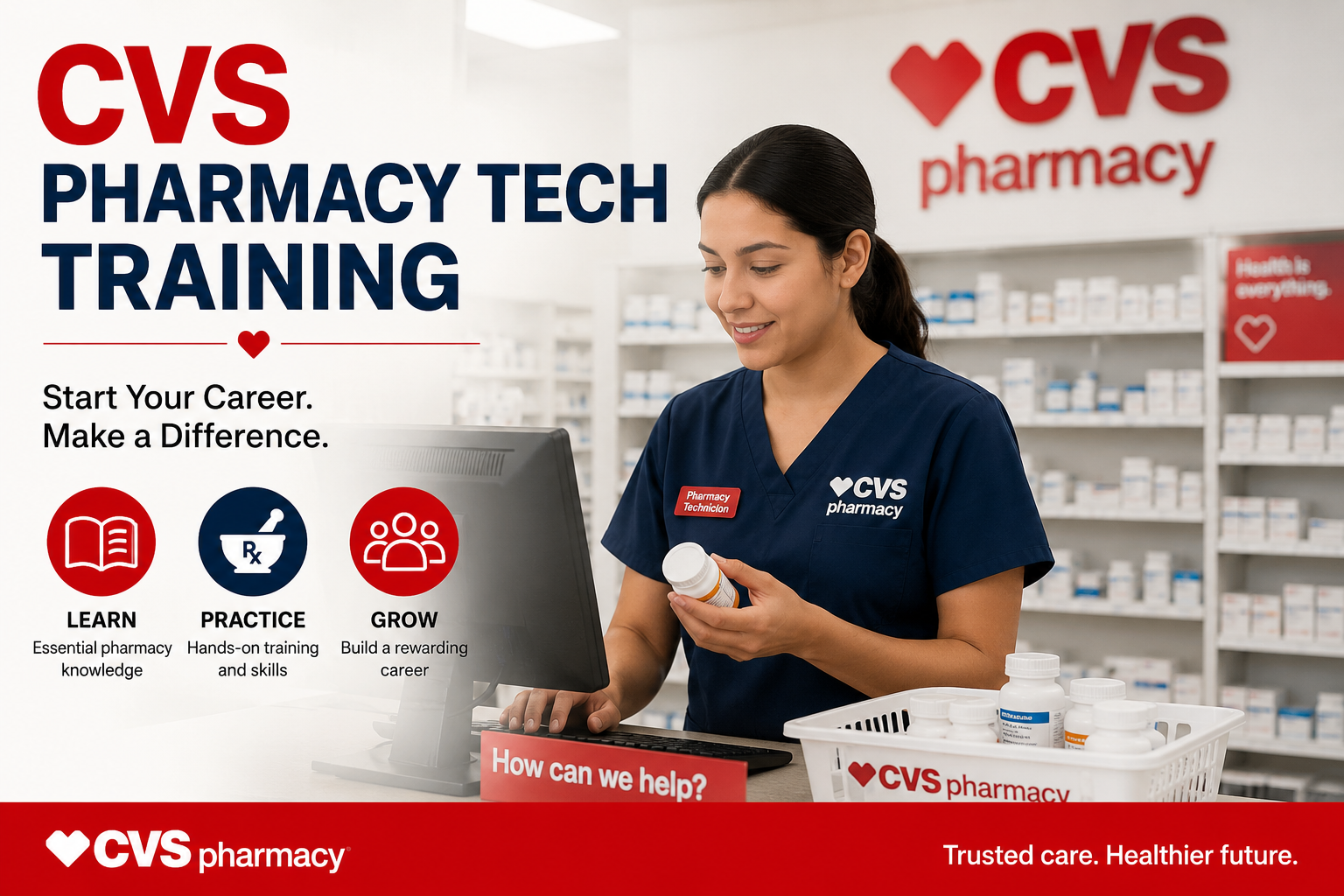
The healthcare industry continues to create opportunities for individuals seeking stable and rewarding careers. Among the most accessible entry points is becoming a pharmacy technician, a role that combines customer service, medication management, and healthcare support. For many aspiring professionals, CVS pharmacy tech training serves as a practical pathway into the field.
Whether you’re exploring a career change or entering the workforce for the first time, understanding how this training program works can help you make an informed decision. From hands-on learning to professional development, CVS provides a structured approach designed to help technicians build confidence and competence in a real pharmacy environment.
Understanding the CVS Pharmacy Technician Role
Pharmacy technicians play an essential role in supporting pharmacists and ensuring patients receive medications safely and efficiently. Their daily responsibilities often include:
- Processing prescriptions
- Assisting customers
- Managing inventory
- Handling insurance claims
- Maintaining patient records
- Preparing medications under pharmacist supervision
At CVS pharmacies, technicians work in fast-paced settings where accuracy, communication, and organization are critical. Training is designed to prepare employees for these real-world responsibilities from day one.
What Is CVS Pharmacy Tech Training?
CVS pharmacy tech training is an employer-sponsored learning program that combines online coursework, classroom-style instruction, and hands-on experience in a working pharmacy. The goal is to equip new technicians with the knowledge and practical skills needed to perform their duties effectively.
Rather than focusing solely on theory, the program emphasizes learning through experience. Trainees interact with pharmacy systems, assist customers, and gain exposure to daily operations under the guidance of experienced team members.
This approach helps bridge the gap between education and employment, making the transition into the profession smoother.
Key Components of the Training Program
The training process typically covers several important areas that every pharmacy technician must understand.
Pharmacy Fundamentals
New trainees learn the basics of:
- Prescription terminology
- Drug classifications
- Dosage forms
- Medication safety practices
- Pharmacy regulations
This foundational knowledge supports accuracy when processing prescriptions and communicating with patients.
Customer Service Skills
Since technicians interact directly with customers, communication training is a significant component. Employees learn how to:
- Answer patient questions
- Resolve common concerns
- Maintain professionalism
- Protect confidential health information
Strong customer service skills often contribute to better patient experiences and smoother pharmacy operations.
Technology and Pharmacy Systems
Modern pharmacies rely heavily on digital systems. During training, participants become familiar with:
- Prescription processing software
- Insurance claim systems
- Inventory management tools
- Electronic patient records
Learning these technologies early helps technicians become productive more quickly.
Hands-On Experience
One of the most valuable aspects of the program is practical training within an active pharmacy setting. Trainees observe experienced staff and gradually take on more responsibilities as their confidence grows.
I once spoke with a pharmacy technician who said that working directly with customers during training helped them learn faster than studying textbooks alone.
Benefits of Joining a Pharmacy Training Program
Many people choose employer-sponsored technician programs because they offer several advantages over independent study.
Learn While Working
Instead of completing education before seeking employment, participants often gain experience while earning a paycheck.
Structured Career Path
The program provides a clear roadmap for professional development, helping employees understand what skills they need to advance.
Exposure to Real Pharmacy Operations
Classroom instruction is valuable, but daily exposure to actual pharmacy workflows can accelerate learning and confidence.
Preparation for Certification
Many pharmacy technician trainees use the knowledge gained during training to prepare for certification exams and future career opportunities.
CVS Training vs Other Learning Options
Prospective pharmacy technicians often compare different pathways before choosing one.
| Training Option | Hands-On Experience | Employment Opportunity | Learning Pace | Industry Exposure |
|---|---|---|---|---|
| CVS Pharmacy Training | Extensive | Immediate | Structured | High |
| Community College Programs | Moderate | Separate Job Search | Academic Schedule | Moderate |
| Online Courses | Limited | Separate Job Search | Flexible | Low |
| Self-Study Programs | Minimal | Separate Job Search | Self-Paced | Limited |
Each option has strengths, but employer-based training often appeals to individuals who prefer learning directly within a professional environment.
How Pharmacy Technician Training Translates to Daily Responsibilities
Imagine a new technician named Sarah beginning her first week in a CVS pharmacy. Initially, she learns how prescriptions move through the system and how inventory is managed. By the second week, she starts assisting customers with prescription pickups under supervision.
A month later, Sarah can confidently process transactions, verify patient information, and coordinate with pharmacists when questions arise. This gradual progression allows new employees to build competence without feeling overwhelmed.
Scenarios like this demonstrate how practical experience complements formal instruction.
Skills Developed During Training
Beyond technical knowledge, pharmacy technician development often focuses on transferable workplace skills.
Attention to Detail
Even small mistakes can have serious consequences in healthcare settings. Training encourages precision and accuracy in every task.
Time Management
Busy pharmacies handle numerous prescriptions daily. Technicians learn to prioritize responsibilities efficiently.
Team Collaboration
Pharmacists, technicians, and support staff work together to provide patient care. Effective teamwork becomes a valuable professional asset.
Problem Solving
Insurance issues, prescription clarifications, and customer concerns require technicians to think critically and respond appropriately.
These skills remain useful throughout a healthcare career, even beyond pharmacy settings.
Career Growth Opportunities
Many individuals view pharmacy technician positions as long-term careers rather than temporary jobs.
After gaining experience, technicians may pursue opportunities such as:
- Lead pharmacy technician roles
- Inventory management positions
- Pharmacy operations support
- Specialty pharmacy work
- Healthcare administration pathways
The combination of practical experience and industry knowledge can open doors to various healthcare-related careers.
Is CVS Pharmacy Tech Training Worth It?
For individuals seeking an accessible entry point into healthcare, the program offers several compelling advantages. Participants gain real-world experience, develop valuable professional skills, and learn directly within a functioning pharmacy environment.
The opportunity to earn income while developing industry knowledge makes the training particularly attractive for those looking to start a new career without spending years in school first.
Success ultimately depends on personal commitment, willingness to learn, and the ability to thrive in a customer-focused healthcare setting.
Also Read:#Beaconsoft Latest Tech Info & Emerging Tech Trends
Conclusion
CVS pharmacy tech training provides a structured pathway into one of healthcare’s most in-demand support professions. By combining education, hands-on experience, and workplace exposure, the program helps participants build both technical knowledge and practical confidence.
For aspiring pharmacy technicians, the experience extends beyond learning how to process prescriptions. It develops communication skills, attention to detail, and professional habits that can support long-term career growth. Whether you’re entering healthcare for the first time or exploring a new professional direction, this training can serve as a valuable stepping stone toward future opportunities.
Frequently Asked Questions
How long does CVS pharmacy tech training take?
Training length can vary depending on location, state requirements, and individual progress. Most participants complete core training over several weeks while continuing to gain experience on the job.
Do I need previous pharmacy experience?
No. Many pharmacy technician trainees begin with little or no prior healthcare experience. The program is designed to teach foundational skills from the ground up.
Can pharmacy technician training help with certification preparation?
Yes. The knowledge and practical experience gained during training often support preparation for pharmacy technician certification exams.
What skills are most important for pharmacy technicians?
Attention to detail, customer service, communication, organization, and basic computer skills are among the most valuable qualities.
Is a pharmacy technician career in demand?
Healthcare services continue to require trained pharmacy support staff, making pharmacy technician roles an important part of the healthcare workforce.
Can pharmacy technicians advance their careers?
Absolutely. Experienced technicians may move into leadership positions, specialty pharmacy roles, inventory management, or other healthcare-related opportunities.